Two prizes at the Singapore Defense Tech Hackathon, both built on DomeCommand

The Singapore Defence Tech Hackathon, run by the Defense Venture Lab at NUSX, wrapped up with teams building on DomeCommand taking 1st and 3rd place in the "Lord of the Rings" integration challenge.
What made it exciting was seeing very different systems come together around the same platform.
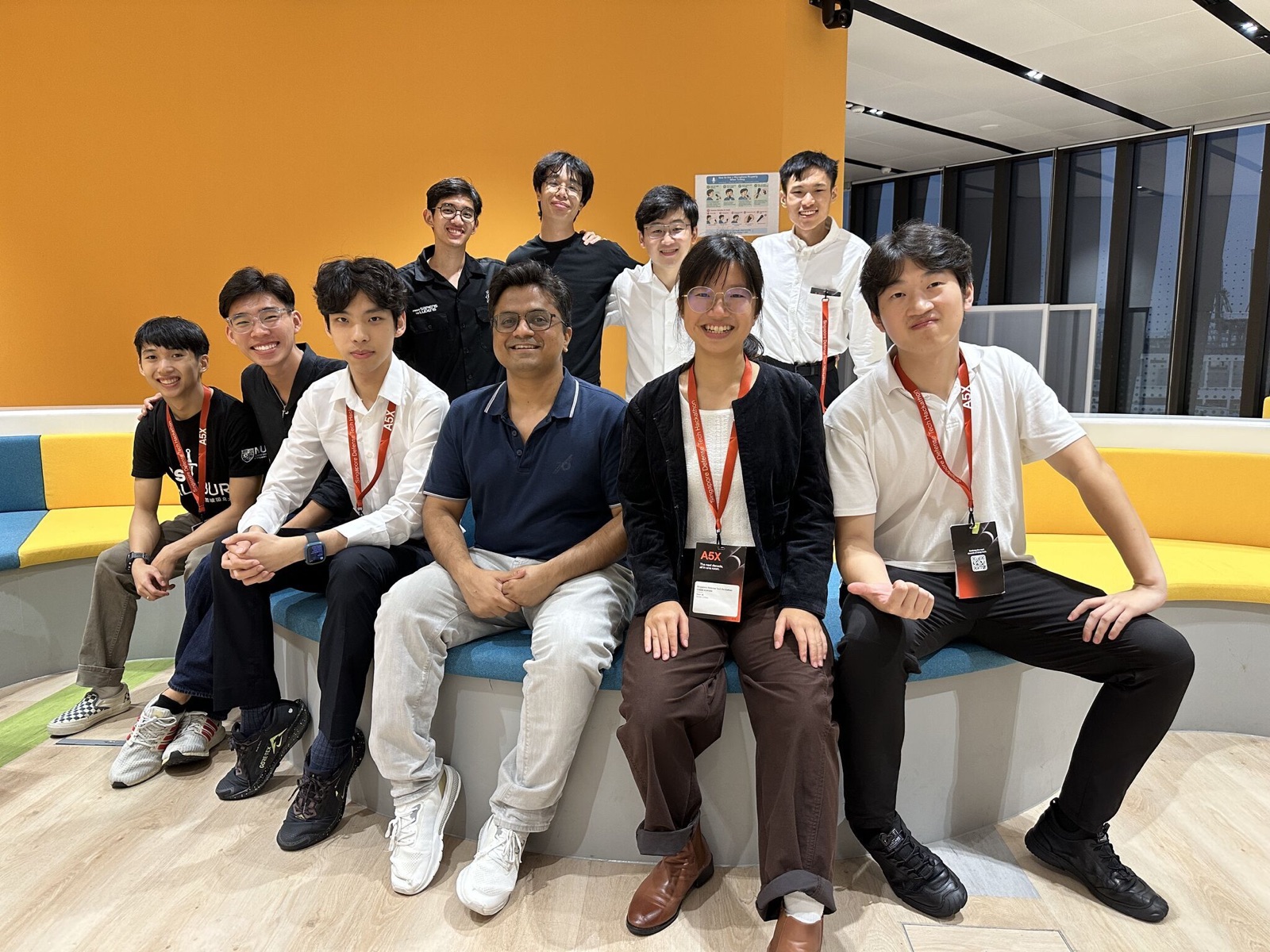
First place: Echelon + Aegis
Two teams built one complete chain, from detection to interception.
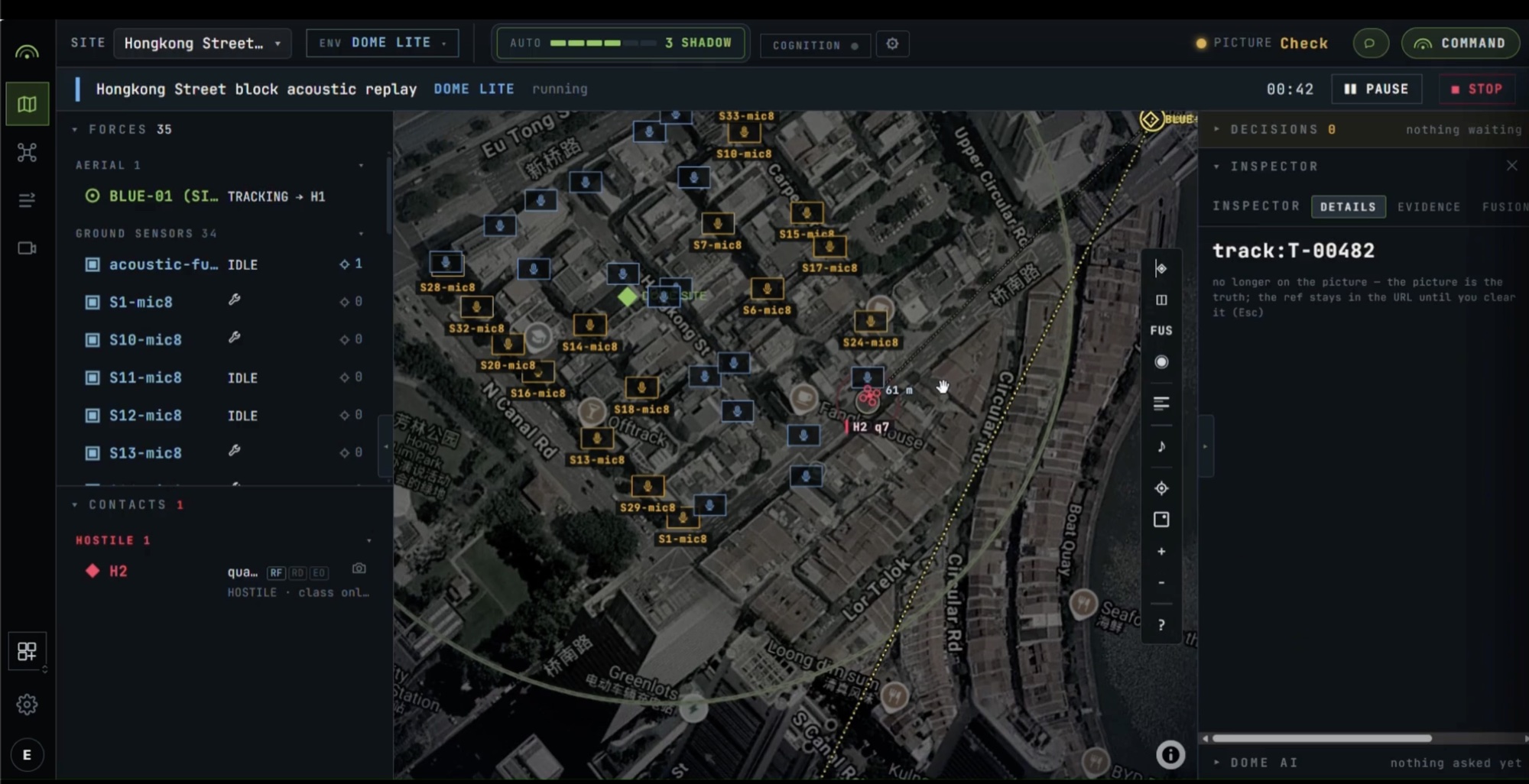
Echelon built the sensing layer. A network of passive microphone arrays detects drone rotors and estimates their direction. Multiple observations are combined into a position, then sent into DomeCommand through the same sensor interface used by any other source.
Aegis built the interceptor. It receives a cue, launches, then handles the terminal phase using its own camera. The team reports a parts cost of $652 per aircraft and a 0.82 m median closest approach across 15 simulated engagements.
DomeCommand sat in the middle as command and control. It fused the acoustic observations into a track, paired that track with an interceptor, and kept the final engagement under human approval.
ENGAGE · PROTECT pairs BLUE-01 with H2 and holds on APPROVE, REJECT and EDIT, because the hostile call came from the system and the operator has to own it. After approval, the simulated interceptor closes on the track.
Sense. Decide. Engage. The system can track autonomously, but an intercept still requires the operator to approve it.
That is exactly the kind of integration DomeCommand was built for: different sensors, different effectors, one command layer.
Congratulations to Echelon and Aegis.
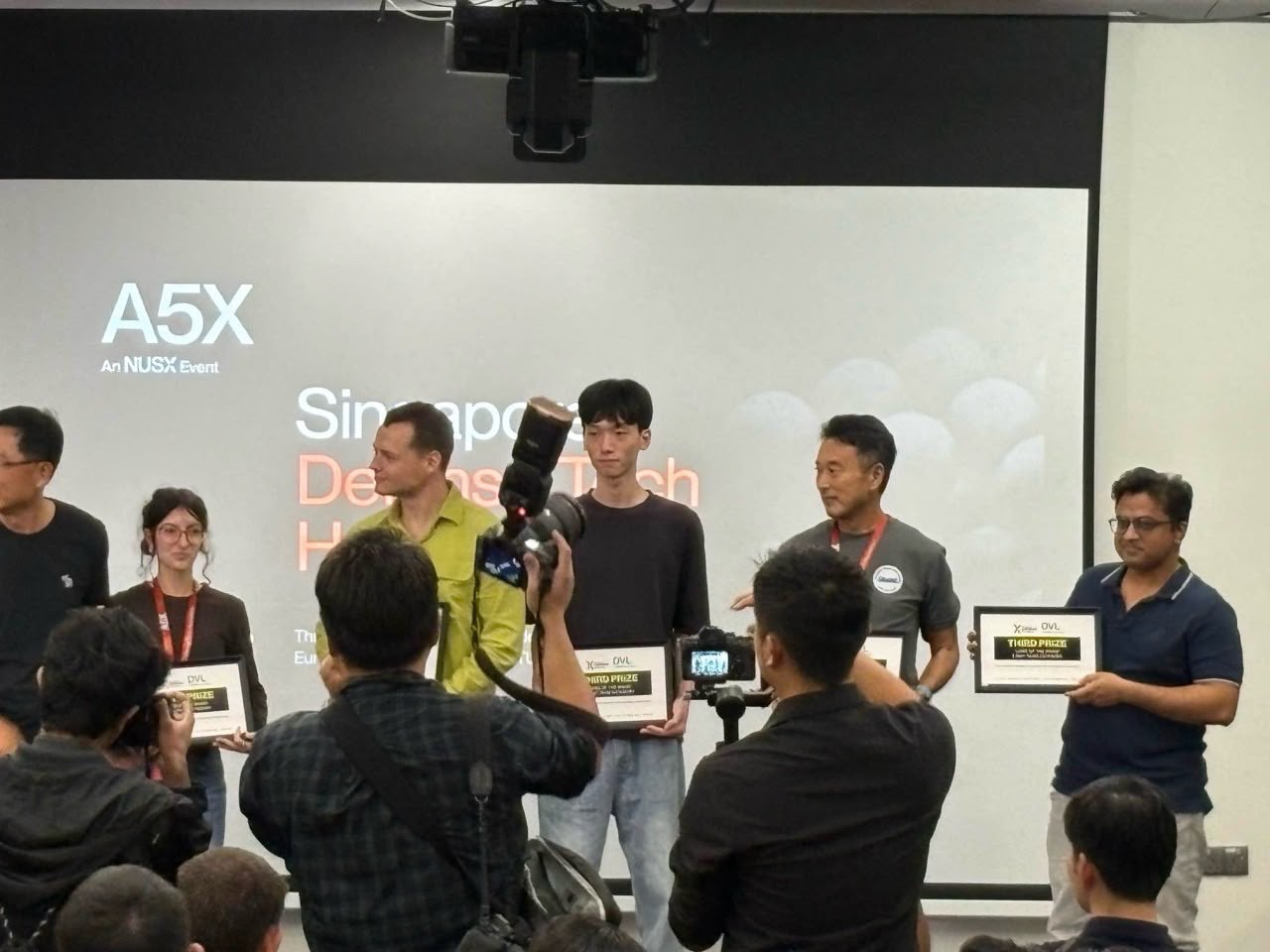
Third place: Phylax
Phylax took DomeCommand in a direction we had not planned for.
Instead of using the simulator only for operators, they built a civil defence application for Singapore. The idea was simple: simulate a drone attack, then turn that scenario into guidance for civilians on what to do during an incident.
The same simulation used to rehearse an operator response could also help rehearse a civilian one. That was a great example of what happens when the platform is open enough for other teams to take it somewhere unexpected.
Congratulations to Hiroyuki Anno and Leelou Peyroulet.
What stood out
The best part of SDTH was not just the prizes. It was seeing teams connect acoustic sensing, autonomous interception and civilian defence to the same underlying platform in a matter of days.
That is the model we want for DomeCommand: open, sensor agnostic and built for integration.
A big thank you to Gary Ang and Ben Cistecky for bringing the programme together and creating the space for teams to build, integrate and test quickly.
This is the kind of ecosystem DomeCommand was built to plug into.