Use case 03 / Critical infrastructure
The site you already have.
Bring the site's sensors into one picture, configure a civil action ceiling, and keep a record of detections and decisions.

The site's own sensors
Check adapter support for your equipment
Civil ceiling at SHADOW
Jam and intercept are unavailable
One small board
Server, console, simulator, database
Airports, refineries, ports and power plants need to detect and assess drones using the equipment on site. Their operators also need clear limits on the actions available to them. Those limits depend on the site's authority and operating requirements.
Runs on what the site has
Start with the protocols the site's equipment speaks: radar, video metadata, RF sensors and cooperative aircraft feeds. Match that list against Integrations to see which adapters are available and which need further work before deployment.
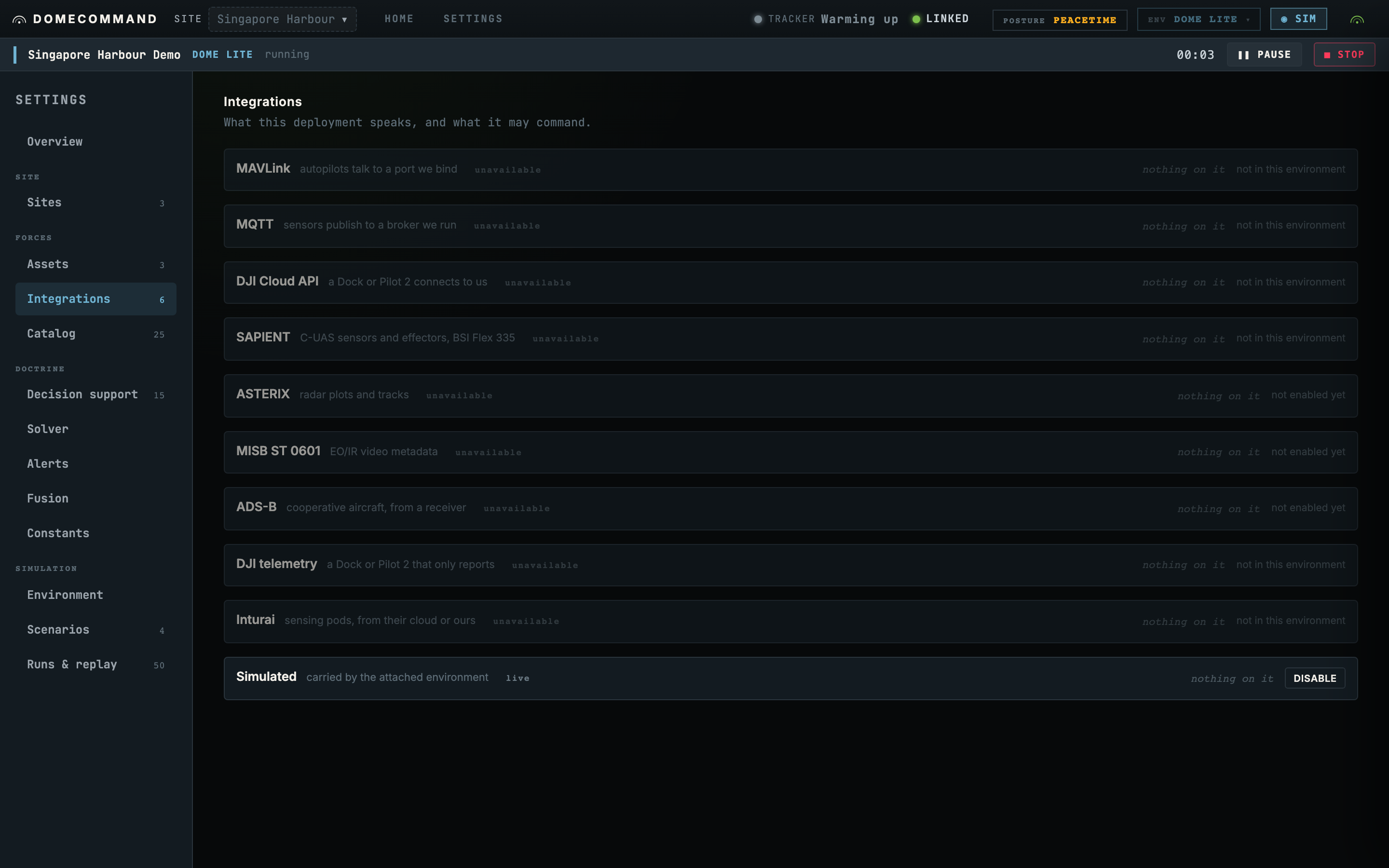
Detection and the civil ceiling
Detection and classification feed the live picture. Rules can raise alerts and propose sensor cueing, with actions subject to the configured authority settings. In a civil envelope, the ceiling stops at SHADOW: jam and intercept are unavailable. The ceiling limits the software's actions; it does not itself establish legal authority.
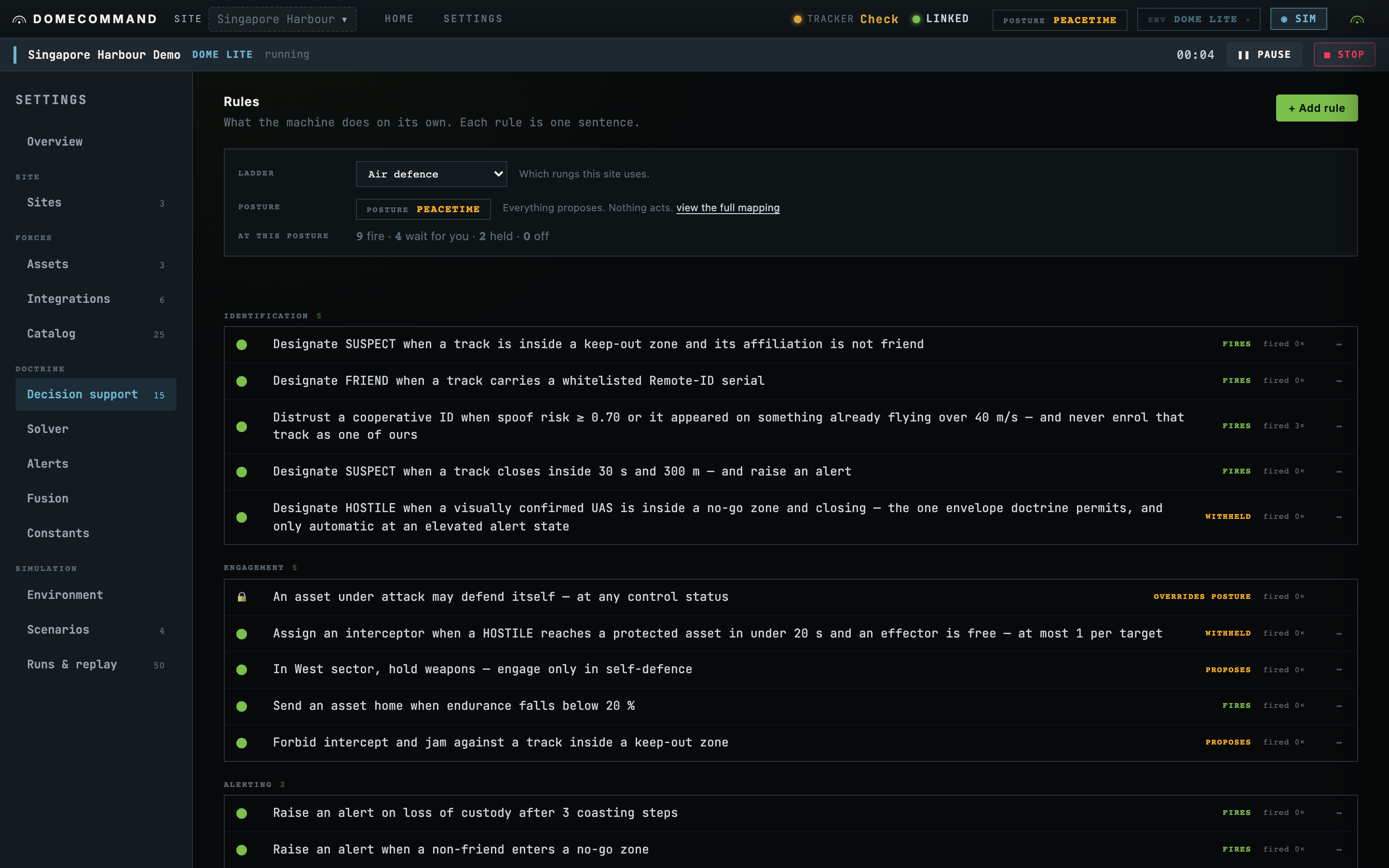
Evidence by construction
Recorded observations, designations, alerts and decisions let operators review what the system reported and how they responded. Simulation runs can be replayed for training and review.
Sized for a site
The whole deployment (server, console, simulator and database) runs on one small board in a cabinet, close to the sensors, and keeps working when the link out is poor.
Where to go next
- Ingesting data for connecting the site's sensors.
- Policy and rules for authoring the site's doctrine.
- Recommended infrastructure for the reference node and where each workload sits.