Use case 02 / Counter-UAS
The last ten seconds.
Prioritise the tracks that need a response, compare feasible plans, and approve actions with the sensor evidence in view.
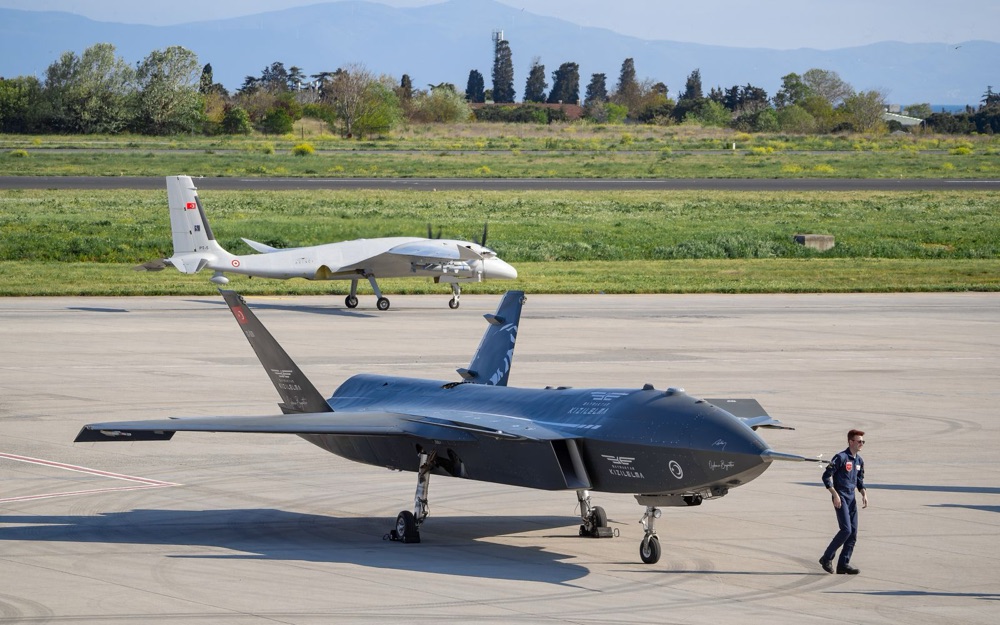
One contact per object
Fused from every sensor
Ranked plans, every pass
Scored on leakers, cost, coverage
Deterministic replay
The same raid, run again
A saturation raid creates competing demands on sensors, operators and effectors. DomeCommand ranks threats and proposes assignments against magazine depth, reach, cost and coverage, so operators can compare the available responses.
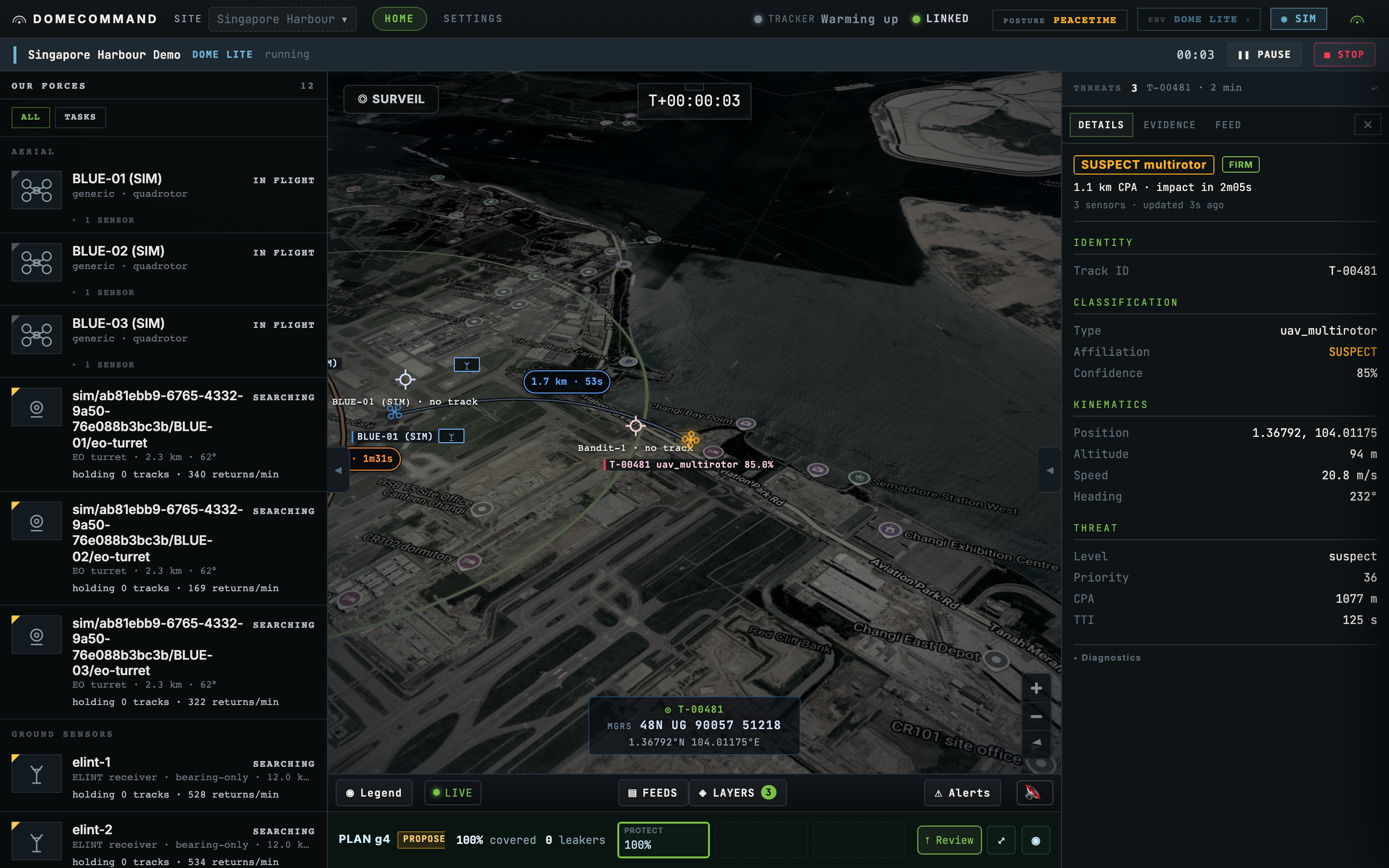
The track that matters, with its evidence
Fusion associates sensor observations into tracks and updates their threat scores. Closest point of approach, time to impact, confidence and contributing sensors help operators assess which tracks need attention.
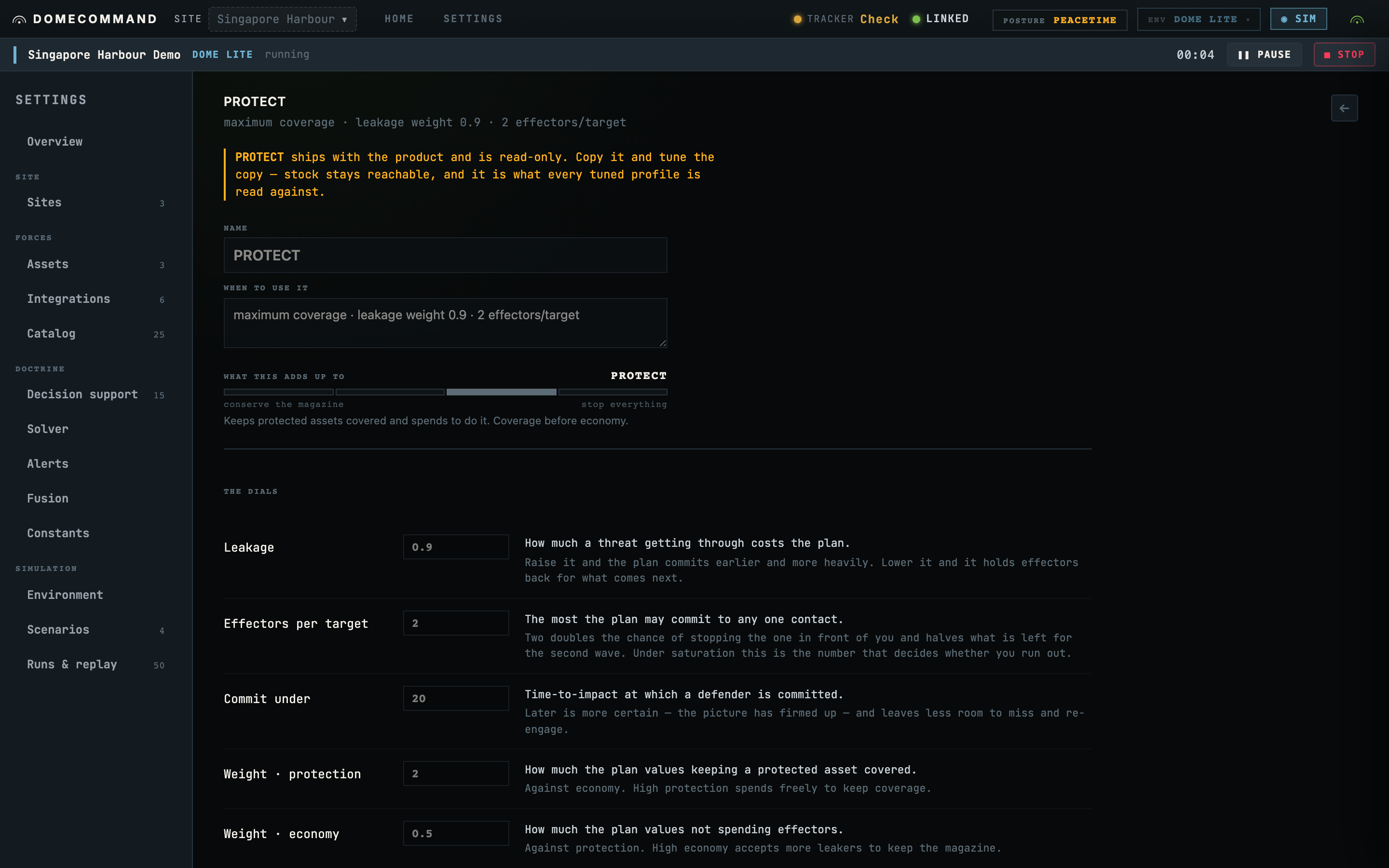
Compare effector assignments
Each solver pass authors ranked plans under real limits: magazine depth, effectors per target, interceptor reach, commit timing. Every plan is scored on predicted leakers, cost and coverage. The operator compares the candidates and approves actions that require a decision. Any automatic release remains subject to the configured authority gates and is recorded.
The shot is answerable
Tasks record the action, the authority check and the approval or refusal. Operators can inspect the event history after an incident and replay recorded simulation runs.
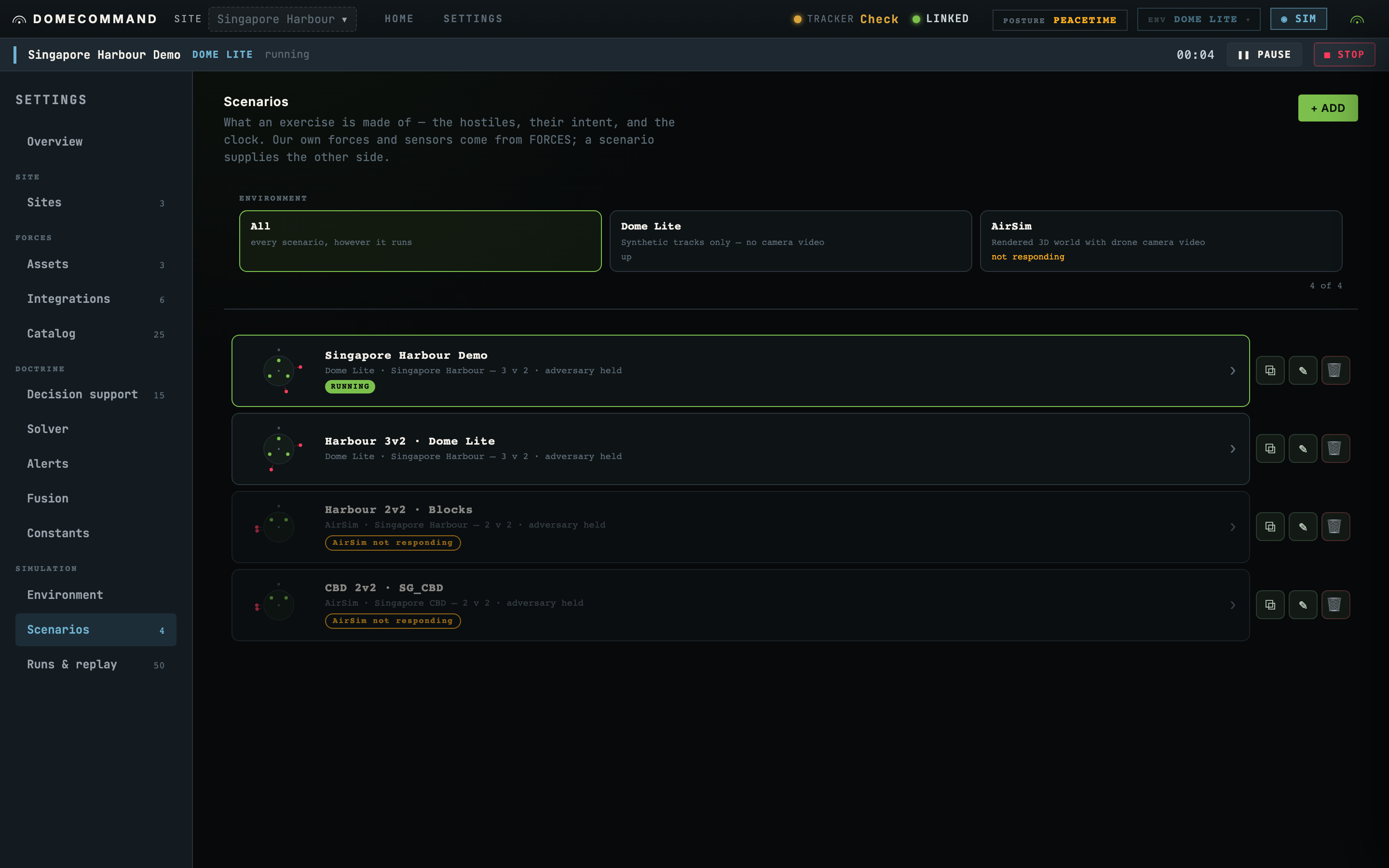
Rehearse before it happens
Describe a raid in plain language and run it against your laydown in simulation. Reuse the scenario and seed to compare changes in deployment or doctrine.
Where to go next
- Sensor fusion for where the track comes from.
- Solver configuration for the profiles and their weights.
- Simulation for authoring and replaying a raid.