Solver configuration
Set the objective, weights and assignment limits used to calculate candidate plans.
The solver proposes assignments between available assets and threats, subject to the configured constraints. A planning profile sets the weights used to compare those assignments. The authority gate determines whether a proposed action may run.
What it optimises for
Four metrics contribute to the score.
| What it means | Raise it when | |
|---|---|---|
| Protection | Coverage of the assets you are defending | Protecting assets takes priority over conserving inventory |
| Economy | The cost of what gets spent | You need to conserve costly effectors |
| Standoff | How far out an engagement happens | Debris, overflight or collateral is the constraint |
| Coverage | Sensing and defended volume held | Maintaining sensor coverage is the priority |
Plus three that shape the plan rather than score it:
- Leakage weight. How much an expected leaker adds to the plan’s cost.
- Effectors per target. How many defenders may be committed to one threat.
- Commit threshold. The time to impact at which a defender is committed rather than merely assigned.
Worked examples
| You want | Set it like this |
|---|---|
| Nothing gets through, cost is secondary | Protection high, economy low, leakage weight high, two or three effectors per target |
| Spend as little as possible, accept some leakage | Economy high, leakage weight low, one effector per target |
| Keep engagements far from the site | Standoff high, commit threshold early |
| Hold the picture over the whole area | Coverage high, fewer effectors committed per target |
Planning profiles
A planning profile is a named, versioned set of weights and assignment settings. Three ship: PROTECT prioritises coverage of protected assets, ATTRIT prioritises kills, and PRESERVE conserves resources.
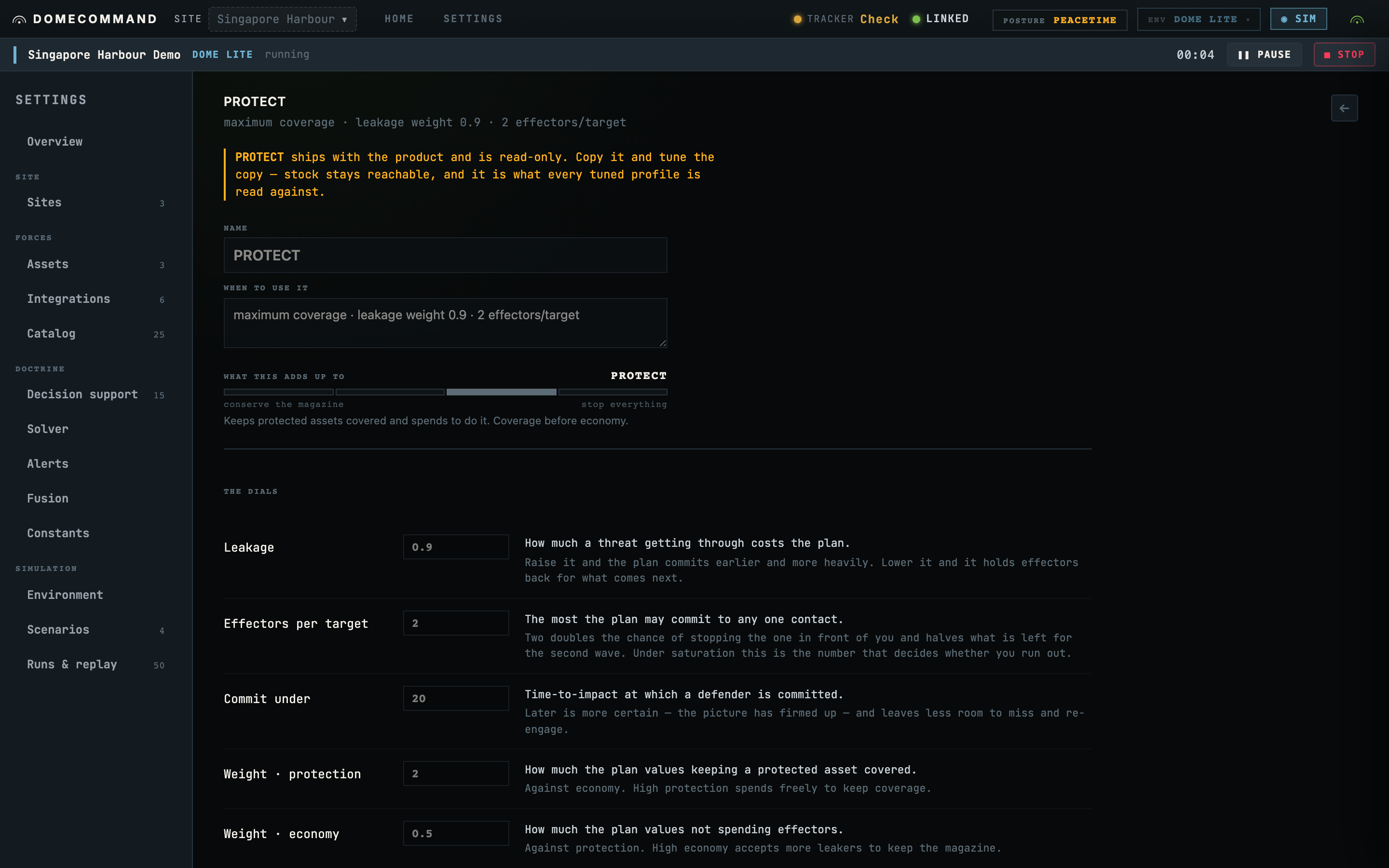
The Objective selects the planning goal: protect, minimise leakers or balance. The weights and thresholds refine that goal. Copy a shipped profile to tune it; the original stays available, and the copy records which profile it came from.
The slate
The slate selects up to three candidate plans per planning pass and the profile used for each candidate. Two settings also apply to planning:
| Setting | What it does |
|---|---|
| Replan every | Sets the planning cadence. Zero means on demand only. |
| Interceptor cruise | Sets the speed used to calculate intercepts. Match it to the airframe's performance. |
What the planner weighs
Each pass scores candidate plans on predicted leakers, cost and coverage. Review those scores alongside the available assets and the constraints on each proposed action.
Plans and authority
A profile determines how a plan is calculated. Rules, the ceiling and the line determine whether its actions may run. Changing a profile does not widen authority.
Where to go next
- Decision support for the gates a plan still has to clear.
- Constants for the values underneath.